New study: The Agentic AI gap
Read now

On-device Agents
Devices that diagnose themselves and guide your operators
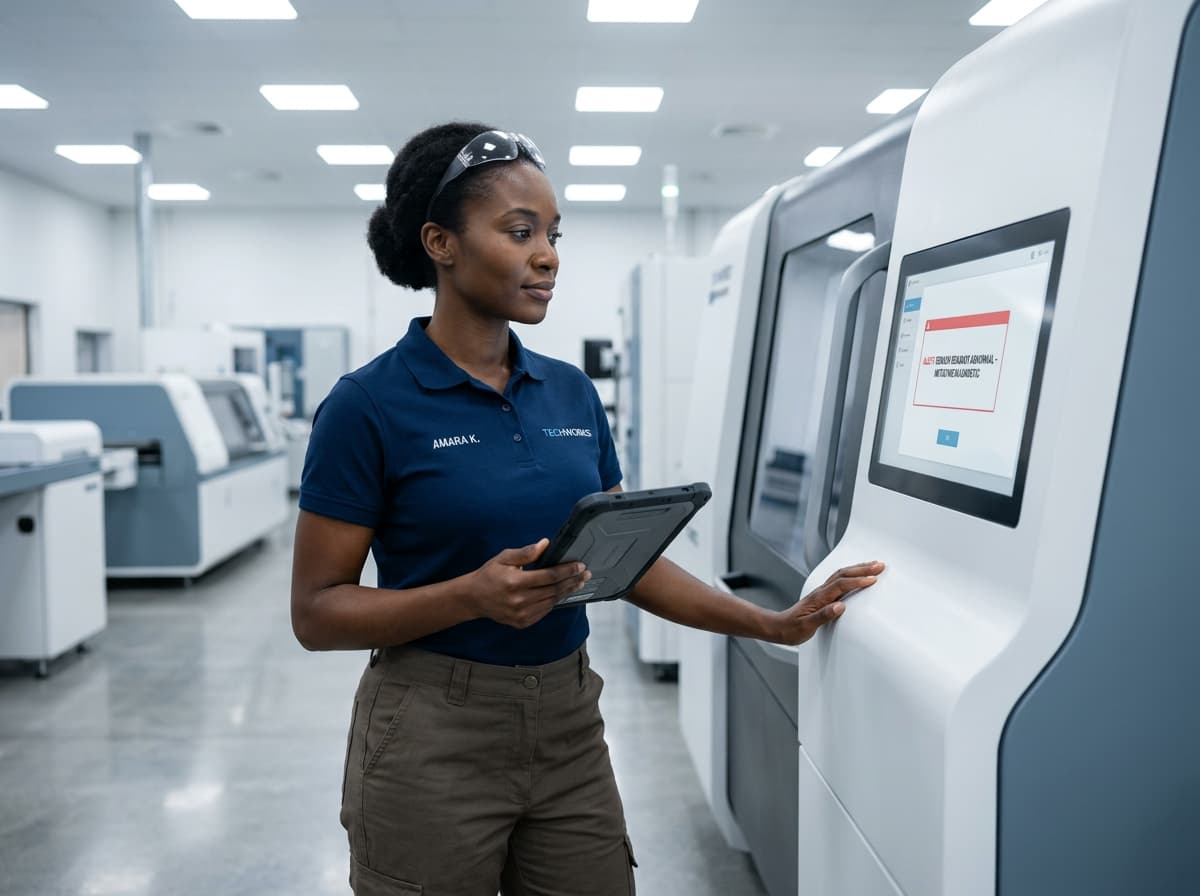
Service quality should not depend on a technician being on site. An agent on the device diagnoses faults against device data and service history, and guides users to the right next step, networked or fully local.
Let's get in touch1
loop on the device: recognise, decide, act
2
perspectives in every assessment: device and AI
0
connectivity needed for the local-only variant
Qualification
When an on-device agent is the right move
These are the situations where service and operation no longer scale with your technicians, and the device itself has to help.
Every fault needs a technician
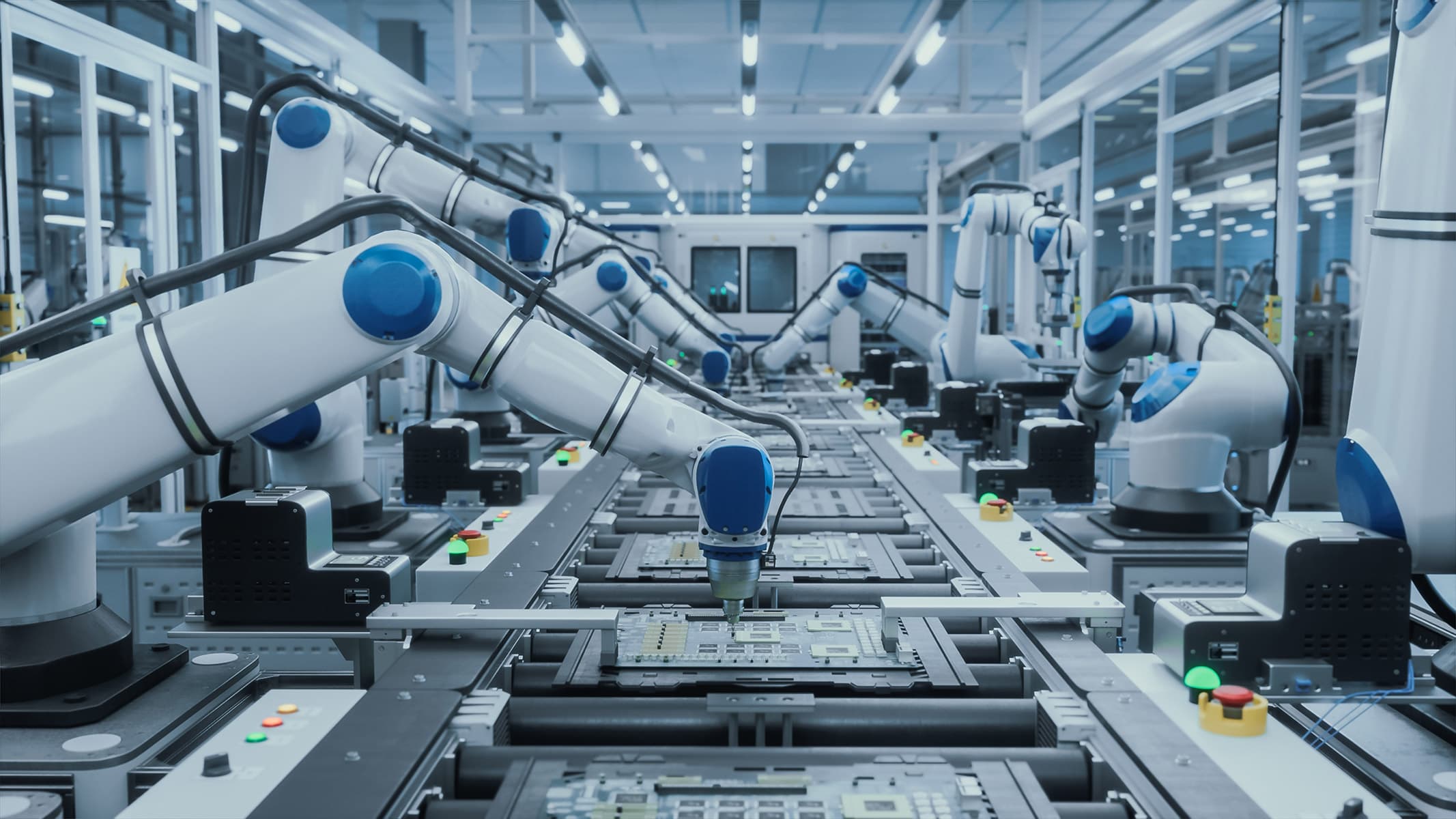
A technician has to be on site or on the phone for each malfunction, however routine the underlying cause turns out to be.
 01.
01.Knowledge that walks out the door
Troubleshooting know-how lives with a few experts instead of in a knowledge base that improves with every case.
 02.
02.Service quality varies by country
You cannot deliver the same service quality worldwide, especially where technician dispatch is slow or costly.
 03.
03.One interface for every operator
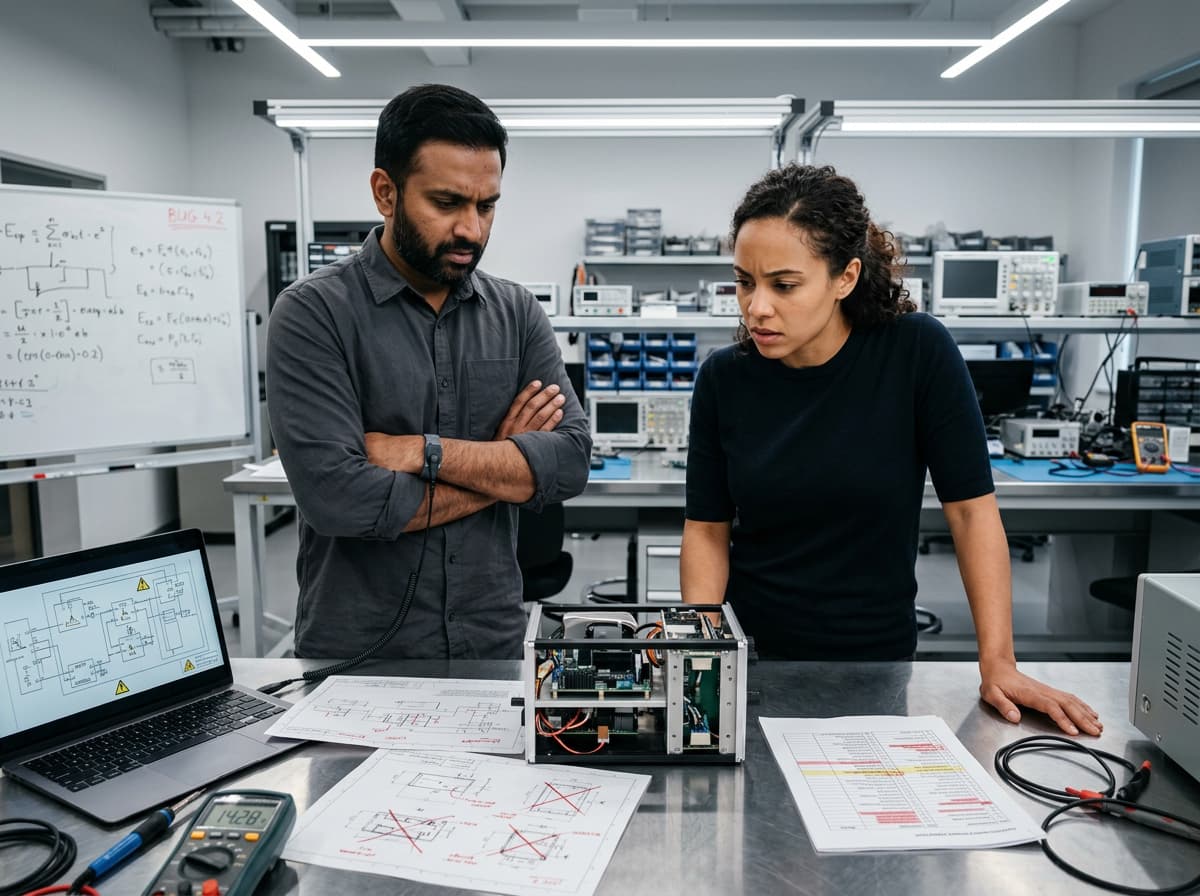
End users and service technicians go through the same fixed interface, regardless of training, language, or role.
 04.
04.AI or rules? Nobody can say
There is no structured way to decide between rule logic and an agent, so budgets go to AI where rules would do, or nowhere.
 05.
05.Capabilities
What an on-device agent does for your device
Agents that reason over your device data and act where they are needed, built only where rules run out.
Faults diagnosed at the device.
The agent matches the fault against device data, manuals, and earlier service tickets, so a share of issues never reaches a technician.
Networked or fully local.
Connected, the knowledge base grows with every ticket and technician resolution. Local-only, a lighter agent runs without any connectivity.
Technicians as allies.
Service technicians get a pre-diagnosis before they arrive, and their resolutions feed the knowledge base the agent learns from.
The next step, before the question.
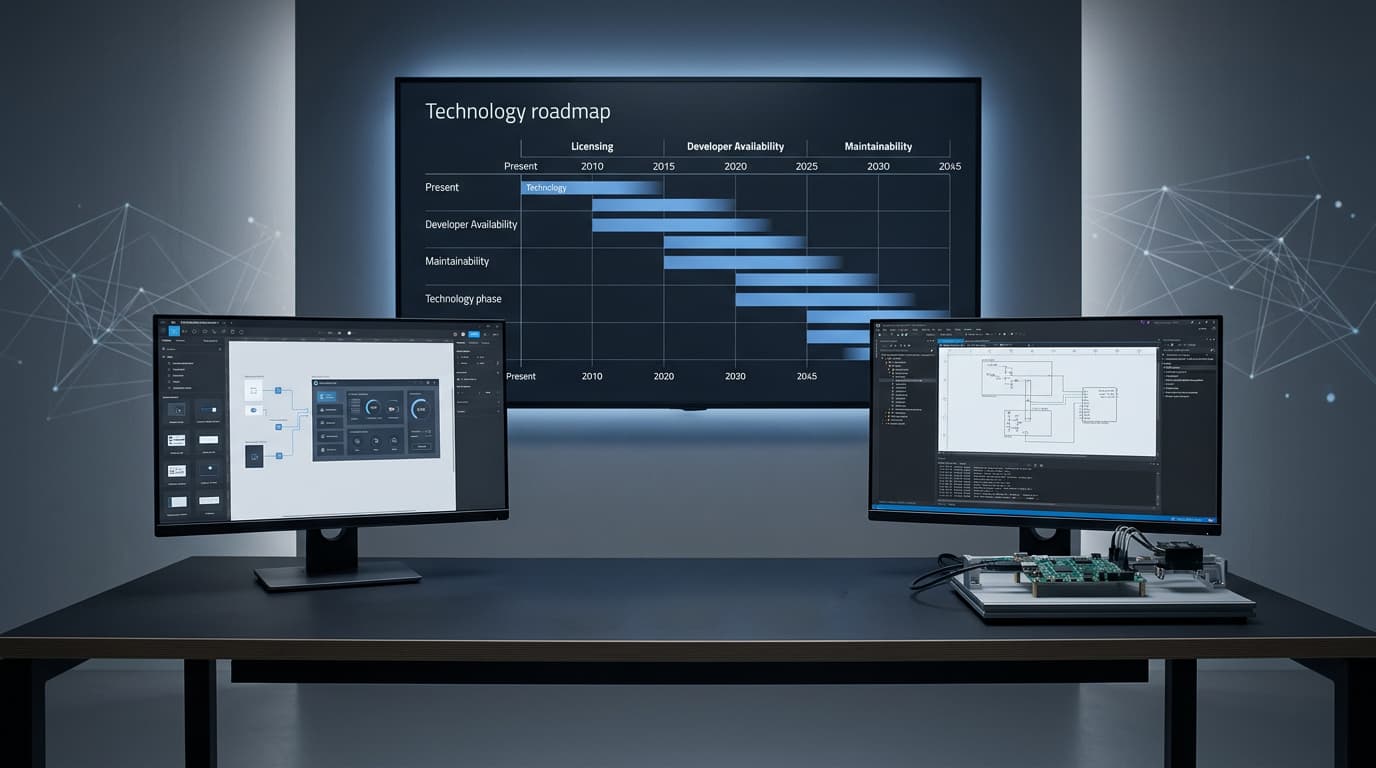
The device reads what the user is about to do and brings up the matching controls, so no question has to be typed first.
Expert level for every operator.
Operation is guided so that users without specialist training can work the way your most experienced operator does.
Sensor data with untapped relationships.
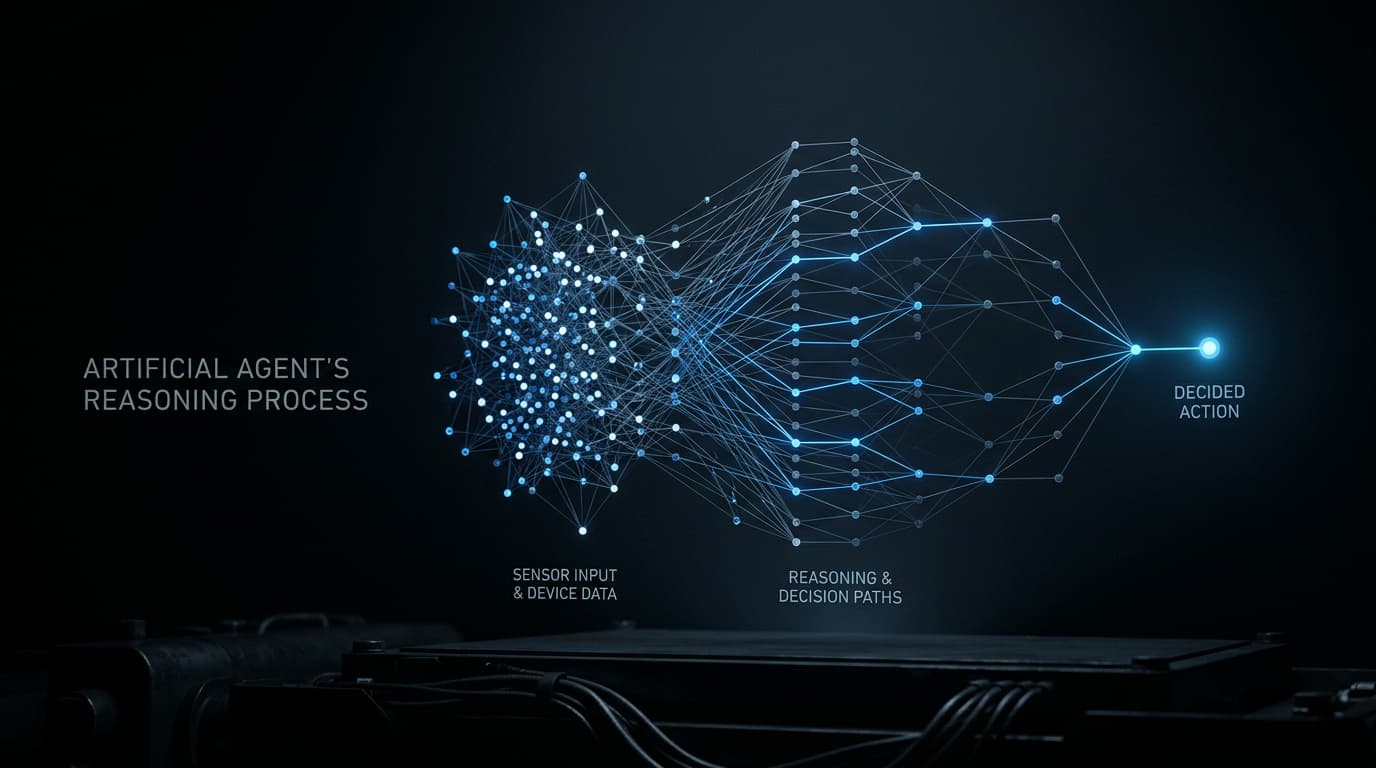
Where several factors interact and identical readings call for different behaviour, an agent may find patterns that rules cannot express.
Rules first, agents second.
Where an outcome can be expressed as rules, a deterministic system is cheaper, verifiable, and recommended instead.
We spoke with several providers. Some wanted to sell us a product. Cloudflight wanted to understand our mission. That made all the difference.

Christian Steigelmann
Managing Director (OpenTechCloud)


Reference
10M service requests a year, answered with the right fix
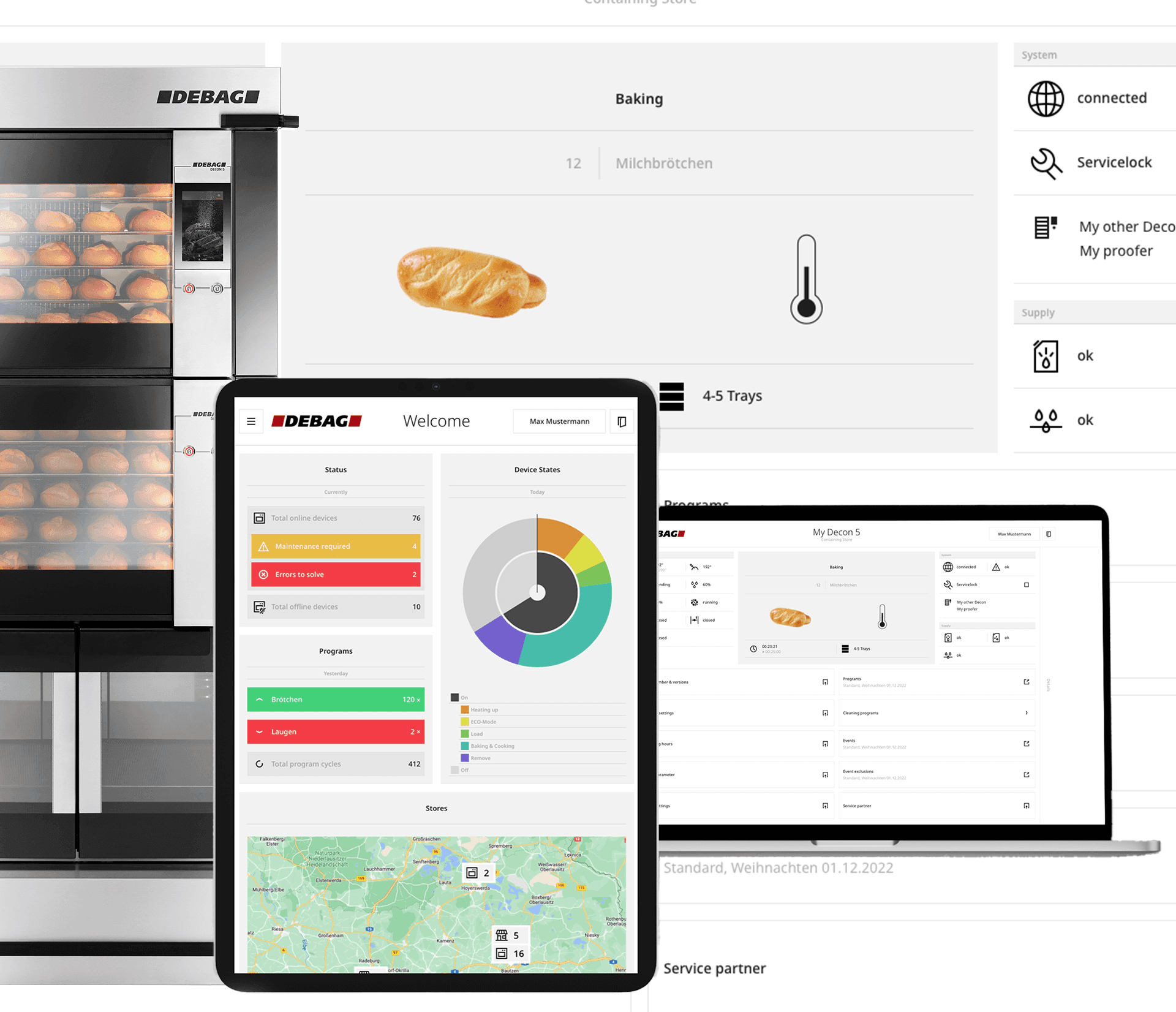
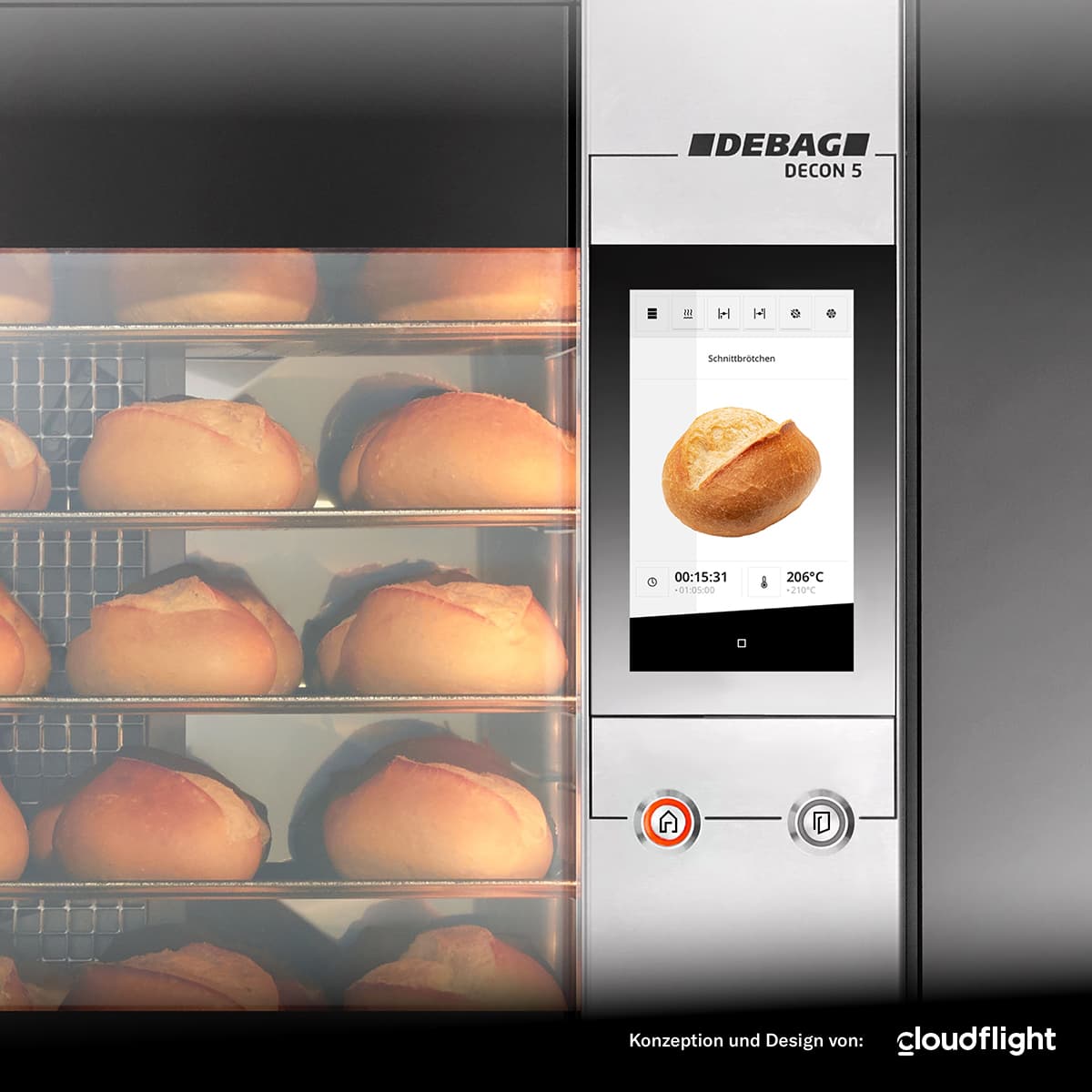
DEBAG is one of the leading manufacturers of professional baking ovens in the bakery industry. In a rapidly changing market, the company aims to simplify the usability of all appliances for various user groups. Together, we developed a platform for DEBAG's products that enables both automatic and manual control of the processes. The design of our solution was recognized with an iF DESIGN AWARD.

Collaboration
This is how your on-device agent is built
The same path as every device project, with one extra step: proof that your data can carry the agent.
- 1
Product vision
Which service or operating problem should the agent solve, and where should your device stand in a few years?
- 2
Concept validation
Rapid prototypes and design stay ahead of development, so device and agent are assessed from both sides before series work.
- 3
Prototype, design, build
Rapid prototypes and design stay ahead of development, so device and agent are assessed from both sides before series work.
- 4
Maintenance to succession
After go-live, the agent is maintained and evolved to its successor. In the networked variant, knowledge grows with every ticket.

Trust
Why manufacturers build on-device agents with Cloudflight
Book a meeting
Find out if your device needs an agent
30 minutes with one of our embedded and AI engineers. We look at your device, your service cases, and whether an agent or rule logic fits better.
FAQ
Questions manufacturers ask about on-device agents
Contact us
How many service calls could your device answer itself?
Loading HubSpot form...